Can bounce houses be used indoors? Learn about ceiling height, floor space, anchoring, electrical needs, fire safety, and safe indoor setup.
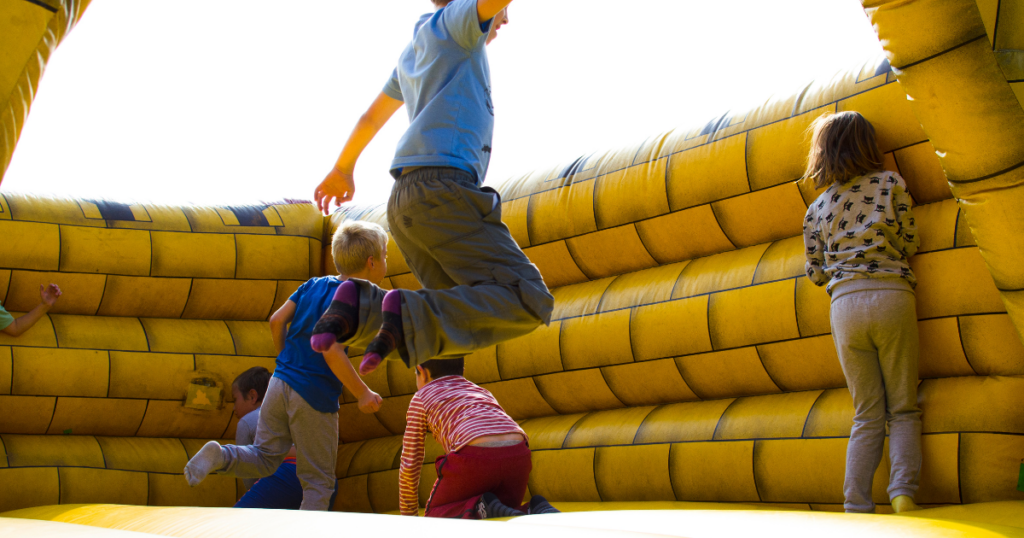
Your children can talk about a bounce house for weeks after experiencing it at a party. And they may want you to get one.
But when you consider your limited outdoor space, you may wonder: can bounce houses be used indoors?
In many cases, yes.
Indoor spaces can offer a controlled setting because you do not have to worry about wind or wet grass.
Still, moving an inflatable inside is not as simple as finding an empty room and plugging in the blower.
You need enough ceiling height, floor space, clear exits, electrical power, and a setup method that suits both the inflatable and the venue.
The surface also matters, as does the age and size of the children using it.
If outdoor weather is suitable, some families may instead consider water slide rentals for a summer event.
But if you are planning a party at a gym, community center, school, church, or event hall, checking these details before booking can save you from a setup problem on party day.
Here is what you should check before booking.
Can Bounce Houses Be Used Indoors?
Yes, bounce houses can be used indoors, provided the inflatable, building, and setup area are suitable.
Indoor bounce houses are commonly used at places such as:
- Gymnasiums
- Community centers
- School halls
- Church halls
- Indoor party venues
- Large event rooms
- Family entertainment centers
The U.S. Consumer Product Safety Commission recognizes bounce houses as constant-air inflatable play devices and points to ASTM safety standards for home and commercial use.
However, an indoor location does not automatically make a bounce house safe.
You still need to check the equipment, room, installation method, and rules for the venue.
Why Indoor Setup Can Be a Good Option
One major benefit of using a bounce house indoors is that you remove some outdoor risks.
Weather is the biggest advantage. Wind, rain, and wet ground can create problems for outdoor inflatables.
The CPSC recommends not using bounce houses in windy conditions and stresses proper anchoring and adult supervision.
Inside, you also have:
- Protection from rain and strong sunlight
- A more stable floor surface
- Better control over the play area
- Less concern about outdoor weather changing during the party
That does not mean you can ignore safety rules. Indoor use simply changes which risks you need to watch.
Check the Ceiling Height Before You Book
Ceiling height is one of the first things you should check.
A bounce house needs enough vertical space for its walls, roof, or other inflated sections. You do not want the top of the inflatable pressing against ceiling lights, fans, beams, pipes, or other equipment.
Measure the actual room height and compare it with the manufacturer’s required clearance.
Do not guess based on how the room looks. A large gym may seem high enough, but hanging lights or other fixtures can reduce the usable space.
If the room is too low, choose a smaller inflatable designed for indoor use.
Make Sure There Is Enough Floor Space
You need more than enough room for the bounce house itself.
Leave space around the inflatable for:
- Entry and exit areas
- The blower and power connection
- Children waiting to enter
- Adult supervision
- Emergency access
The inflatable should not block doors, hallways, stairways, or emergency exits.
This is especially important in commercial venues. Fire and building rules can require inflatable amusement devices to be positioned so they do not block exits or access routes.
For example, North Carolina’s State Fire Marshal guidance specifically addresses keeping inflatable devices from blocking means of egress.
What About Anchoring Indoors?
This is where indoor setup can become tricky.
Outside, many inflatables are secured with stakes driven into the ground. You cannot do that on a concrete or finished indoor floor.
Never assume an inflatable does not need to be secured just because it is indoors.
Ask the rental company or manufacturer how that specific unit should be secured indoors.
Depending on the equipment and venue, the approved method may involve suitable weights or another manufacturer-approved anchoring system.
ASTM F2374 covers the design, installation, operation, inspection, and maintenance of commercial inflatable amusement devices.
The important point is simple: use the anchoring method approved for that inflatable.
Is Concrete Safe for Indoor Bounce Houses?
A hard floor can be suitable for some indoor setups, but the inflatable should not simply be placed anywhere on bare concrete without checking the manufacturer’s instructions.
The floor should be:
- Flat
- Clean
- Free from sharp objects
- Large enough for the complete setup
- Suitable for the inflatable’s approved installation method
A protective mat or floor covering may also be needed, depending on the equipment and venue.
You should also keep cords and blower connections organized so children cannot trip over them.
What About Electrical Power?
Most commercial bounce houses use an electric blower that must run during use.
Before the party, check:
- Where the nearest suitable outlet is.
- Whether the outlet can handle the blower’s electrical load.
- Whether extension cords are permitted.
- Whether the blower connection needs GFCI protection.
- Whether the venue has special electrical rules.
The CPSC’s inflatable safety bulletin advises checking the blower and using appropriate electrical protection, including a GFCI-equipped blower.
Keep the blower and electrical equipment away from water and areas where children can reach or damage them.
Indoor Fire Safety Matters Too
This is one area you should never overlook.
An indoor bounce house should not cover or interfere with:
- Fire exits
- Exit signs
- Sprinklers
- Fire alarms
- Emergency equipment
- Required walkways
Local fire codes can also place requirements on inflatable amusement devices and the materials used to make them.
NFPA documents, for example, reference ASTM F2374 for inflatable amusement devices and address fire safety and electrical considerations.
Your venue should confirm whether a permit, inspection, or fire department approval is required. Rules can vary by location.
How Many Children Can Use an Indoor Bounce House?
Follow the manufacturer’s occupancy limit.
Do not pack as many children as possible into the inflatable just because there is room.
It is also safer to group children who are close in age and size. The CPSC recommends keeping children of similar size together and following the maximum occupancy limit.
You should also have an adult watching the inflatable at all times.
Set basic rules before play:
- No pushing or wrestling.
- No rough play.
- No flips unless specifically allowed.
- Remove shoes and unsafe items.
- Stop play if the inflatable loses air.
- Follow the manufacturer’s age and weight limits.
Are Indoor Bounce Houses Better for Some Events?
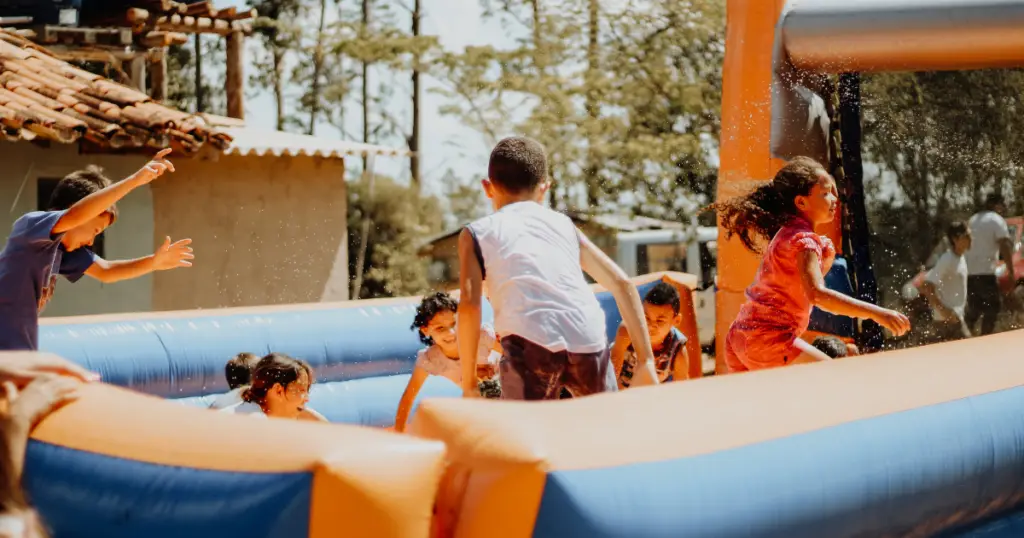
Indoor use can make sense when you are hosting:
- Birthday parties during bad weather
- School events
- Church activities
- Winter celebrations
- Community events
- Corporate family days
If you are comparing bounce house rentals for an indoor event, tell the rental company about your venue before choosing a unit.
They can help you determine whether the inflatable fits the room and whether the setup method works for that location.
For summer events, some people also compare indoor play options with water slide rentals, especially when outdoor space and weather are suitable.
Conclusion: Can Bounce Houses Be Used Indoors?
Yes, bounce houses can be used indoors when the equipment and venue are suitable.
Before you set one up, check:
- Ceiling height
- Floor space
- Anchoring requirements
- Electrical power
- Emergency exits
- Fire safety equipment
- Manufacturer instructions
- Age, height, weight, and occupancy limits
- Local venue and fire-code requirements
The safest approach is to treat an indoor bounce house as more than party equipment.
It is an inflatable play structure that needs proper setup, supervision, and space.
When you check those details before the event, you can give children a fun place to play without turning your party setup into a safety problem.