Learn how to fix brakes by identifying common brake problems, checking warning signs, and knowing when pads, rotors, fluid, or professional repair are needed.
How to fix brakes is a common question when a car starts making a strange noise, pulling to one side, or taking longer to stop.
Brakes wear as they are used, but not every brake problem means you need to replace every part.
Sometimes the issue is worn brake pads.
Other times, the cause may be a damaged rotor, low brake fluid, a sticking caliper, or another part of the braking system.
If you are searching for a professional mobile mechanic near me, the problem may be something that can be inspected at your location, depending on the vehicle and repair needed.
The important thing is not to guess.
Brake problems can affect how quickly and safely a vehicle stops.
Knowing the warning signs can help you decide whether the problem needs a basic inspection, a specific repair, or immediate professional attention.
Start With the Brake Symptoms
Before fixing anything, identify what the vehicle is doing.
Common warning signs include:
- Squealing or grinding: The brake pads may be badly worn.
- Vibration when braking: The rotors or other brake components may need inspection.
- Soft or spongy pedal: There may be air, a leak, or another hydraulic problem.
- Car pulling to one side: Braking force may not be equal on both sides.
- Longer stopping distance: The braking system may not be working properly.
- Burning smell or smoke: The brakes may be overheating.
- Brake or ABS warning light: The vehicle may have detected a brake-system fault.
AAA lists noise, vibration, pulling, a soft pedal, fluid leaks, and warning lights among signs that brakes need attention.
Check the Brake Pads
Brake pads are designed to wear down over time.
When they become too thin, they may no longer provide the braking performance the vehicle needs.
A visual inspection can sometimes show whether the friction material is getting low.
However, the exact minimum thickness depends on the vehicle and manufacturer.
If the pads are worn, replacing them is usually part of the repair.
But changing pads without checking the rest of the brake system can miss a bigger problem.
Do not treat a new set of pads as a complete brake repair if the rotors, calipers, hoses, or hydraulic system also show problems.
Inspect the Rotors or Drums
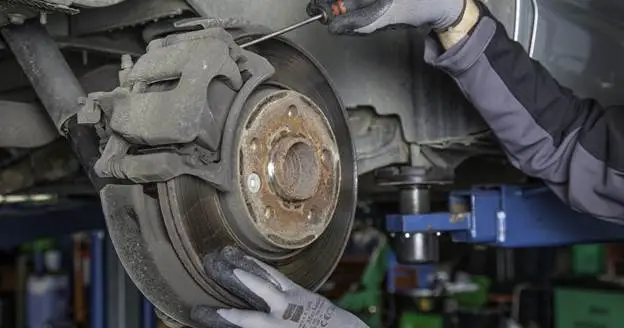
Disc brakes use rotors, while some vehicles use drum brakes at one or more wheels.
Rotors can develop:
- Deep grooves
- Cracks
- Uneven wear
- Excessive thickness loss
- Heat-related damage
A vibrating brake pedal or steering wheel during braking can be a reason to inspect the rotors.
The correct repair may be resurfacing or replacing the rotor, depending on its condition and the vehicle manufacturer’s specifications.
A proper brake inspection should include measuring the relevant components rather than deciding by appearance alone.
Check Brake Fluid and Leaks
Hydraulic brake systems depend on brake fluid to transfer pressure from the pedal to the braking components.
If the fluid is low, do not simply keep adding more without finding out why.
Low fluid can be linked to worn brake components or a leak.
Using the wrong type of brake fluid can also cause problems.
NHTSA notes that brake fluid requirements and labeling exist because improper or contaminated fluid can affect braking-system performance.
Always use the fluid specified in the vehicle owner’s manual.
If you see fluid leaking near a wheel, brake line, or under the vehicle, have the system inspected before driving.
What About a Soft Brake Pedal?
A soft or spongy brake pedal deserves attention.
Possible causes include:
- Air in the hydraulic system
- Low brake fluid
- A fluid leak
- A problem with a master cylinder
- Other hydraulic or brake-system faults
Bleeding brakes can remove air from a hydraulic system, but it should not be treated as a cure for every soft-pedal problem.
If the pedal suddenly feels much lower than normal or moves unusually close to the floor, avoid driving the vehicle until the cause has been checked.
When Brake Repair Is Not a DIY Job
Some basic checks are reasonable for an informed vehicle owner, but brake repair can require specialized tools, correct lifting equipment, torque specifications, and knowledge of the vehicle’s braking system.
Professional help is especially important when dealing with:
- Brake fluid leaks
- Hydraulic system repairs
- ABS faults
- Damaged brake lines
- Caliper problems
- Electronic parking brakes
- Severe rotor or drum damage
- A brake pedal that goes toward the floor
NHTSA maintenance guidance also stresses proper vehicle support and wheel blocking when work requires lifting the vehicle.
That matters because a brake repair is not worth attempting if the vehicle cannot be safely supported.
Don’t Confuse Brake Problems With Other Car Problems
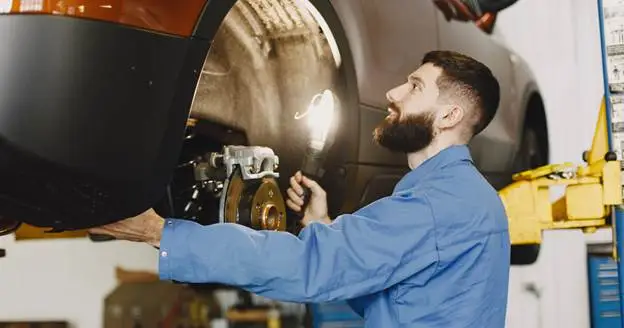
Not every vehicle problem that happens while braking comes from the brakes themselves.
For example, a car pulling during braking could involve suspension or steering components.
A vibration could also have more than one possible cause.
The same applies when a driver searches for auto repair near me after noticing a problem.
Proper diagnosis should come before replacing parts.
The idea is not to replace the most obvious component, but to find the actual cause of the braking problem.
How to Know When You Should Stop Driving
Some brake symptoms should not be ignored.
Stop driving and arrange professional assistance if:
- The brake pedal goes nearly to the floor.
- The vehicle has very weak stopping power.
- Brake fluid is visibly leaking.
- There is smoke from a wheel.
- A serious brake warning remains illuminated.
- The brakes make severe grinding noises.
- The vehicle becomes difficult to control while braking.
AAA recommends prompt inspection when drivers experience serious symptoms such as a soft pedal, fluid leaks, pulling, or significant brake noise.
Conclusion
Knowing how to fix brakes is useful, but knowing when not to attempt a repair is just as important.
Brake pads, rotors, fluid, calipers, and hydraulic parts can all produce different symptoms.
Correct diagnosis helps prevent wasted money and, more importantly, helps keep the vehicle safe.
When the problem involves weak braking, a serious warning light, a fluid leak, or a pedal that feels unsafe, professional inspection should come before getting back on the road.